In the National Assembly, the France-Armenia Friendship Group renews its mobilization in support of Yerevan and Armenian prisoners (Press)

On the initiative of Laurent Wauquiez, president of the France-Armenia Friendship Group of the National Assembly, a working meeting was held on Monday attended by several members of parliament and a delegation from the Coordinating Council of Armenian Organizations in France (CCAF). It was an intense session devoted to the situation in Armenia, the fragile balance of power in the South Caucasus, and France's role in a still-unstable regional context.
Around the table were Nadia Gortzounian, Mourad Papazian, and Ara Toranian for the CCAF; Hovhannes Guèvorguian, representative of Artsakh; and Tigrane Yégavian, analyst specializing in the Caucasus. All presented their views on the latest political and geopolitical developments in Yerevan and Baku.
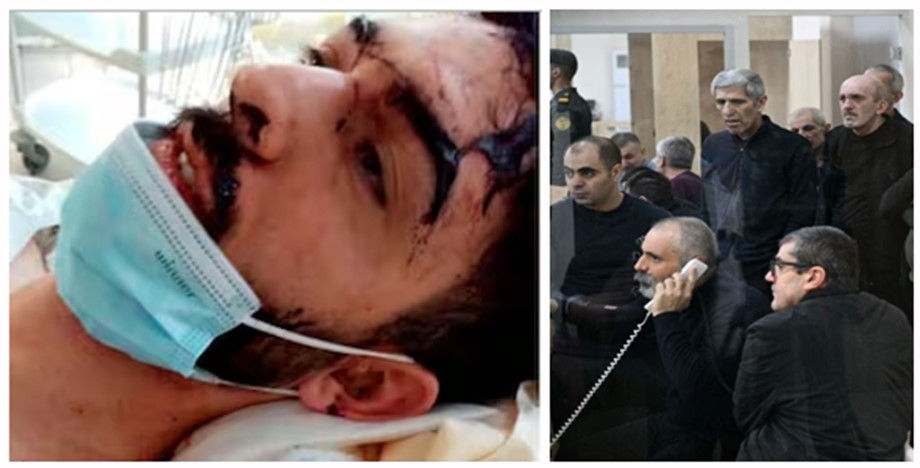
The first topic discussed was the fate of Armenian political and military prisoners detained in Azerbaijan.
The delegation reiterated the continuing illegality of these detentions, despite Baku's international commitments and repeated calls from European organizations. The speakers called for the active remobilization of French diplomacy, arguing that the issue cannot be separated from a “just” and lasting peace.
The deputies present agreed to refocus parliamentary attention on these issues, in particular through cross-party initiatives and constant questioning of the French and European authorities.
The meeting also focused on the content and consequences of the peace treaty currently being finalized between Armenia and Azerbaijan.
CCAF representatives and experts expressed their concerns about a text that could be likened to an imposed peace, with no known guarantees of security for the Armenian population and the country's sovereignty, while pressure and threats from the Turkish-Azerbaijani tandem continue.
They pointed out that the negotiations are taking place in a context marked by the forced displacement of 120,000 Armenians from Artsakh, the cultural erasure led by Baku, and the persistence of an asymmetrical military balance of power.
France–Armenia: a strategic partnership to be strengthened
The discussions provided an opportunity to take stock of the progress made in the talks on the strategic partnership between Paris and Yerevan, announced in 2023 and gradually structured since then.
The CCAF representatives welcomed France's continued commitment, while stressing that this partnership must now enter a more operational phase:
-support in the areas of defense and security,
-enhanced economic cooperation,
-consolidation of humanitarian aid, particularly for refugees from Artsakh,
-increased support for Franco-Armenian development projects.
The delegation also presented an overview of Armenia's economic situation and the challenges posed by the reception of refugees from Artsakh.
Despite the efforts of the Armenian government, the needs remain considerable, whether in terms of housing, infrastructure, employment, or social integration.
CCAF representatives emphasized the importance of Franco-Armenian partnerships, citing in particular twinning arrangements and entrepreneurial, cultural, and academic initiatives that continue to develop despite the geopolitical context.
Concrete decisions for the future
At the end of the discussions, the members of the friendship group announced several decisions and areas for further work:
-Strengthen parliamentary action on the issue of Armenian prisoners in Azerbaijan.
-Increase France's involvement in monitoring the peace process and supporting Armenia.
-Establish more regular dialogue between the friendship group, the CCAF, experts, and actors committed to Armenia.
-Support Franco-Armenian initiatives in the humanitarian, economic, educational, and cultural fields.
This meeting marks a clear remobilization of the French Parliament around Armenian and South Caucasus issues. This momentum is set to continue in the coming months, in step with a region where the balance of power is becoming increasingly complex and decisive for European security.